
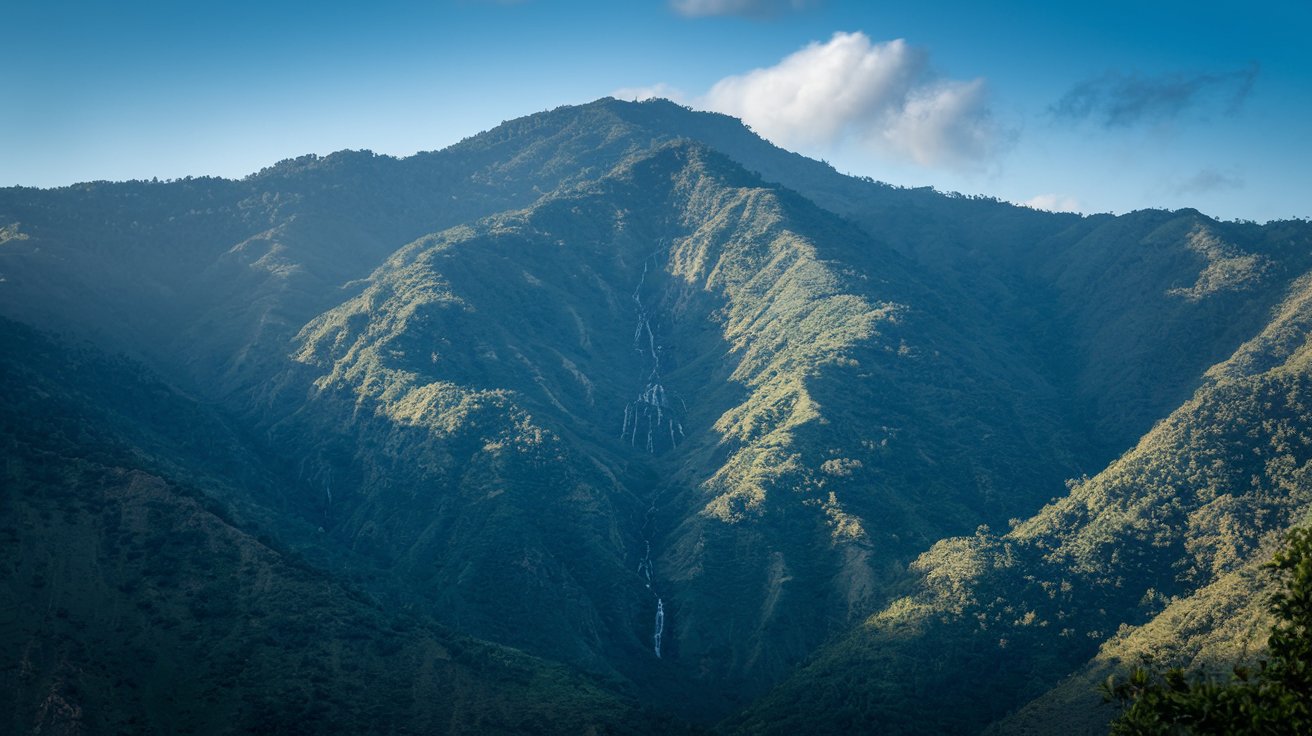
The Sierra Maestra mountain range is located in Cuba, specifically in the southeastern provinces of Santiago de Cuba and Granma. This iconic mountain system spans approximately 250 kilometers along Cuba’s southern coast and includes Pico Turquino, the nation’s highest peak at 1,974 meters above sea level.
Geographic Location and Boundaries of Sierra Maestra
The Sierra Maestra mountains are situated in southeastern Cuba, forming a natural barrier between the Caribbean Sea and the inland valleys. This mountain range extends from Cape Cruz in the west to the Guantánamo Bay area in the east, covering parts of Santiago de Cuba, Granma, and Holguín provinces. The mountains rise dramatically from sea level to over 1,900 meters, creating one of the most spectacular landscapes in the Caribbean region.
Unlike the Sierra Madre ranges found in Mexico and other Central American countries, Cuba’s Sierra Maestra represents the island’s primary mountain system. The range forms part of the Greater Antilles mountain chain and serves as the backbone of Cuba’s southeastern region, influencing local climate patterns and supporting unique ecosystems found nowhere else in the Caribbean.
Provincial Distribution and Administrative Boundaries
The Sierra Maestra spans three Cuban provinces, with the majority located in Santiago de Cuba and Granma provinces. The western section lies within Granma Province, home to the Desembarco del Granma National Park, while the central and eastern portions extend through Santiago de Cuba Province. This geographic distribution makes the mountain range accessible from multiple major Cuban cities, including Santiago de Cuba, Bayamo, and Manzanillo.
Highest Peaks and Elevation Profile
Pico Turquino, standing at 1,974 meters, represents the highest point not only in the Sierra Maestra but in all of Cuba. Other significant peaks include Pico Cuba at 1,872 meters and Pico Suecia at 1,734 meters. These elevations create diverse microclimates within the mountain range, supporting everything from tropical forests at lower elevations to cloud forests near the summits, making this country’s mountain system exceptionally biodiverse.
Historical Significance of Sierra Maestra in Cuban History
The Sierra Maestra holds immense historical importance as the primary stronghold of the Cuban Revolution from 1956 to 1959. Fidel Castro and his revolutionary forces established their headquarters in these mountains, using the rugged terrain as a natural fortress against Batista’s army. The dense forests and steep valleys provided perfect cover for guerrilla warfare tactics that ultimately led to the revolution’s success.
Today, visitors can explore numerous historical sites throughout the mountain range, including La Comandancia de la Plata, Castro’s former headquarters hidden deep in the Sierra Maestra. This site, now a national monument, preserves the original buildings and artifacts from the revolutionary period, offering insight into this pivotal chapter of Cuban history that shaped the country’s future for decades to come.
Revolutionary War Sites and Monuments
The Sierra Maestra contains over 20 documented revolutionary sites, including combat zones, camps, and supply routes used during the Cuban Revolution. La Comandancia de la Plata remains the most significant, featuring Castro’s personal quarters, radio station, and meeting areas. Other important locations include Alto del Naranjo and the battlefields near Pico Turquino, where decisive encounters between revolutionary and government forces took place in this historic mountain range.
Impact on Cuban National Identity
The Sierra Maestra mountains have become synonymous with Cuban independence and resistance, deeply embedded in the nation’s cultural identity. The phrase Sierra Maestra itself evokes images of struggle, determination, and ultimate victory in Cuban consciousness. This mountain range appears on Cuban currency, postage stamps, and countless works of art, cementing its status as a symbol of the country’s revolutionary spirit and national pride.
Unique Wildlife and Ecosystems of Sierra Maestra
The Sierra Maestra supports Cuba’s most diverse ecosystems, hosting over 800 plant species, including 34 found nowhere else on Earth. The mountain range serves as a refuge for endemic species such as the Cuban solenodon, Cuban hutia, and numerous bird species including the Cuban trogon and bee hummingbird. The varied elevations create distinct ecological zones, from coastal mangroves to montane cloud forests.
Recent 2024 biodiversity surveys have identified new species of orchids and butterflies within the Sierra Maestra, highlighting the ongoing scientific importance of this mountain range. Conservation efforts in the region focus on protecting these unique habitats while allowing sustainable tourism that benefits local communities in this remarkable country that hosts such extraordinary biodiversity.
Endemic Flora and Rare Plant Species
The Sierra Maestra houses Cuba’s largest concentration of endemic plants, with species like the Cuban pine, mountain palm, and various endemic orchids thriving in the range’s unique microclimates. The cloud forests above 1,000 meters elevation support rare ferns and bromeliads found nowhere else in the Caribbean. These diverse plant communities have adapted to the specific conditions of this mountain range, creating ecosystems that researchers consider among the most important in the region.
Protected Fauna and Bird Watching Opportunities
Bird enthusiasts visit the Sierra Maestra to observe over 100 bird species, including 18 endemic to Cuba. The Cuban trogon, national bird of the country, thrives in these mountains alongside the world’s smallest bird, the bee hummingbird. Mammalian species include the endangered Cuban solenodon and various bat species that play crucial roles in the mountain range’s ecosystem balance and pollination cycles.
Climate and Weather Patterns in Sierra Maestra
The Sierra Maestra experiences a tropical highland climate with significant variation based on elevation and exposure. Lower elevations maintain temperatures between 24-28°C year-round, while peaks above 1,500 meters can experience temperatures as low as 5°C during winter months. The mountain range receives between 1,500-3,000mm of annual rainfall, with the wettest period from May through October.
Microclimate variations within the Sierra Maestra create distinct weather patterns that influence both wildlife distribution and agricultural practices. The windward slopes receive more precipitation than leeward areas, supporting different vegetation types across the mountain range. These climate patterns make this region of Cuba ideal for coffee cultivation and contribute to the area’s reputation as one of the country’s most agriculturally productive highland regions.
Tourism and Activities in Sierra Maestra Mountains
Tourism in the Sierra Maestra focuses on ecotourism, historical tours, and adventure activities that showcase the mountain range’s natural and cultural heritage. Popular activities include hiking to Pico Turquino, visiting revolutionary sites, birdwatching, and exploring coffee plantations. The Cuban government has developed sustainable tourism infrastructure that protects the environment while providing authentic experiences for visitors to this historically significant mountain range.
For 2025, new tourism initiatives in the Sierra Maestra include guided night tours for wildlife observation, photography workshops focusing on endemic species, and multi-day trekking expeditions. Local communities participate in tourism through homestays, traditional craft demonstrations, and authentic Cuban cuisine experiences. These initiatives ensure that tourism benefits both visitors and residents while preserving the natural and cultural integrity of this important country’s mountain system.
Hiking Trails and Mountain Climbing Routes
The Sierra Maestra offers various hiking trails ranging from easy walks to challenging multi-day treks. The most popular route leads to Pico Turquino, Cuba’s highest peak, requiring 2-3 days and offering spectacular views of the Caribbean Sea and inland valleys. Other trails include the La Comandancia route to Castro’s former headquarters and the Gran Piedra circuit, each showcasing different aspects of this diverse mountain range.
Cultural Tourism and Local Communities
Villages within the Sierra Maestra preserve traditional Cuban mountain culture, including coffee farming techniques, folk music, and handicrafts passed down through generations. Visitors can participate in coffee harvesting, learn traditional cooking methods, and experience authentic Cuban hospitality in this remote mountain range. These cultural exchanges provide sustainable income for local families while sharing the rich heritage of Cuba’s mountain communities with international visitors.
Getting to Sierra Maestra: Transportation and Access
Accessing the Sierra Maestra typically involves flying into Santiago de Cuba’s Antonio Maceo Airport or Holguín’s Frank País Airport, followed by ground transportation to mountain access points. The main gateways include the towns of Bartolomé Masó, Yara, and Santo Domingo, each offering different entry points into the mountain range. Road conditions vary, with some remote areas requiring four-wheel-drive vehicles or hiking access.
For international visitors planning to explore the Sierra Maestra in 2025, advance planning is essential due to limited tourist infrastructure in remote mountain areas. Tour operators in Santiago de Cuba and Bayamo provide organized expeditions with experienced guides familiar with the terrain and local conditions. Transportation options include rental cars for independent travelers, organized tour buses, and local taxi services that can navigate the challenging roads leading into Cuba’s most famous mountain range.
Related video about in which country is the sierra maestra mountain range located
This video complements the article information with a practical visual demonstration.
Important things to know about in which country is the sierra maestra mountain range located
Which country is the Sierra Maestra mountain range located in?
The Sierra Maestra mountain range is located in Cuba, specifically in the southeastern part of the island. This mountain system spans approximately 250 kilometers through the provinces of Santiago de Cuba, Granma, and parts of Holguín, making it Cuba’s most significant mountain range and home to the country’s highest peak, Pico Turquino at 1,974 meters above sea level.
How does Sierra Maestra differ from Sierra Madre mountains?
Sierra Maestra is located in Cuba and is part of the Greater Antilles mountain system, while Sierra Madre refers to several different mountain ranges located in Mexico and Central America. Sierra Maestra is much smaller in scale, spanning about 250 kilometers, compared to the extensive Sierra Madre systems that stretch for thousands of kilometers across the North American continent.
What is the highest peak in the Sierra Maestra mountain range?
Pico Turquino is the highest peak in the Sierra Maestra mountain range, standing at 1,974 meters (6,476 feet) above sea level. This peak is also the highest point in all of Cuba and serves as a popular hiking destination for visitors exploring the mountain range’s diverse ecosystems and historical sites.
Can tourists visit the Sierra Maestra mountains in Cuba?
Yes, tourists can visit the Sierra Maestra mountains through organized tours and independent travel. Popular activities include hiking to Pico Turquino, visiting revolutionary historical sites like La Comandancia de la Plata, birdwatching, and exploring local coffee plantations. Visitors typically access the mountains through Santiago de Cuba or Bayamo, with various tour operators offering guided expeditions ranging from day trips to multi-day treks.
Why is Sierra Maestra historically significant?
Sierra Maestra holds tremendous historical significance as the primary stronghold of the Cuban Revolution from 1956-1959. Fidel Castro and his revolutionary forces established their headquarters in these mountains, using the rugged terrain for guerrilla warfare against Batista’s government. The mountains contain numerous preserved revolutionary sites, including La Comandancia de la Plata, making them a symbol of Cuban independence and national identity.
What wildlife can be found in the Sierra Maestra mountains?
The Sierra Maestra supports over 800 plant species and diverse wildlife including endemic species like the Cuban solenodon, Cuban hutia, Cuban trogon (national bird), and the world’s smallest bird, the bee hummingbird. The mountain range hosts over 100 bird species, 18 of which are endemic to Cuba, along with various butterflies, reptiles, and unique flora found nowhere else on Earth.
| Key Aspect | Important Details | Significance |
|---|---|---|
| Location | Southeastern Cuba, 250km range | Cuba’s primary mountain system |
| Highest Peak | Pico Turquino – 1,974 meters | Highest point in all of Cuba |
| Historical Role | Cuban Revolution headquarters 1956-1959 | Symbol of Cuban independence |
| Biodiversity | 800+ plant species, 34 endemic | Caribbean conservation priority |
| Tourism Access | Santiago de Cuba and Bayamo gateways | Ecotourism and historical sites |