
Cuba, the largest Caribbean island, holds countless secrets and fascinating stories that captivate travelers and history enthusiasts worldwide. From its revolutionary past to its vibrant culture, Cuba offers a unique blend of Caribbean charm, Spanish colonial heritage, and socialist ideals. These 35 interesting facts about Cuba reveal the island’s rich tapestry of traditions, political complexities, and surprising realities that make it one of the most intriguing destinations in the Americas.
Geographic and Basic Facts About Cuba
Cuba is the largest island in the Caribbean, spanning approximately 42,426 square miles and home to over 11.3 million people as of 2024. The island nation stretches 760 miles from east to west but only 60 miles at its widest point from north to south. Cuba lies just 90 miles south of Key West, Florida, making it closer to the United States than many realize. The country consists of the main island plus over 4,000 smaller keys and islets.
The capital city Havana houses nearly 2.1 million residents, making it the largest city in the Caribbean. Cuba’s coastline extends for 2,320 miles, featuring pristine beaches, coral reefs, and natural harbors. The island’s highest point is Pico Turquino at 6,476 feet, located in the Sierra Maestra mountain range where Fidel Castro’s revolutionary movement gained momentum during the 1950s.
Cuba’s Revolutionary History and Political System
Cuba’s history took a dramatic turn on January 1, 1959, when Fidel Castro’s revolutionary forces overthrew the Batista government. This marked the beginning of the longest-running communist government in the Western Hemisphere. Castro ruled for 47 years until transferring power to his brother Raúl in 2008, who then passed leadership to Miguel Díaz-Canel in 2018, making him Cuba’s first non-Castro leader since the revolution.
The Cuban Revolution transformed the island from a playground for American tourists and businesses into a socialist state aligned with the Soviet Union. The Bay of Pigs invasion in 1961 and the Cuban Missile Crisis in 1962 brought the world to the brink of nuclear war, cementing Cuba’s place in Cold War history. Today, Cuba remains a one-party socialist state where the Communist Party controls all aspects of government and society.
The US Trade Embargo Against Cuba
The United States imposed a trade embargo on Cuba in 1960, making it the longest-running trade embargo in modern history at over 60 years. This embargo, known as “el bloqueo” in Cuba, restricts American businesses from conducting trade with Cuban interests and prohibits most Americans from traveling to Cuba for tourism purposes. The embargo has cost Cuba an estimated $130 billion in economic losses according to Cuban government calculations through 2024.
Guantanamo Bay Naval Base
Despite tense relations, the United States continues to lease the Guantanamo Bay Naval Base from Cuba, paying $4,085 per month according to a 1903 agreement. However, the Cuban government has refused to cash these rent checks since 1960 in protest of the American presence. The 45-square-mile base houses the controversial Guantanamo Bay detention camp and remains a significant point of contention between the two nations.
Cuban Culture and Daily Life Fascinating Facts
Cuban culture represents a vibrant fusion of Spanish, African, and indigenous Taíno influences that creates a unique Caribbean identity. Music flows through every aspect of Cuban life, from son and salsa to rumba and mambo, with legendary musicians like Benny Moré and Compay Segundo becoming international icons. Baseball, not soccer, reigns as Cuba’s most popular sport, with the island producing numerous Major League Baseball stars including José Abreu, Yasiel Puig, and Aroldis Chapman.
Cuban society operates on a dual currency system that was simplified in 2021 when the Cuban Convertible Peso was eliminated, leaving only the Cuban Peso. Citizens receive monthly food rations through a system called “la libreta,” which provides basic staples but often requires supplementation through private markets. Education and healthcare remain completely free for all Cuban citizens, resulting in a 99.8% literacy rate and one of the highest doctor-to-patient ratios in the world.
Cuban Food and Culinary Traditions
Cuban food combines Spanish cooking techniques with African spices and Caribbean ingredients to create distinctive flavors. Rice and beans (moros y cristianos) form the foundation of most meals, accompanied by roasted pork (lechón), plantains, and yuca. The famous Cuban sandwich originated in Tampa, Florida, not Cuba, but reflects the island’s culinary influence on American cuisine. Coffee culture thrives in Cuba, with the island producing some of the world’s finest arabica beans in the Sierra Maestra mountains.
Arts and Literature in Cuba
Cuba has produced world-renowned writers including Ernest Hemingway, who lived in Cuba for over 20 years and wrote “The Old Man and the Sea” there. The island’s literary tradition includes poets like José Martí, the national hero, and contemporary authors like Leonardo Padura. Cuban art, from colonial architecture in Old Havana to revolutionary murals throughout the island, reflects the nation’s complex history and political evolution.
Unique Transportation and Infrastructure Facts
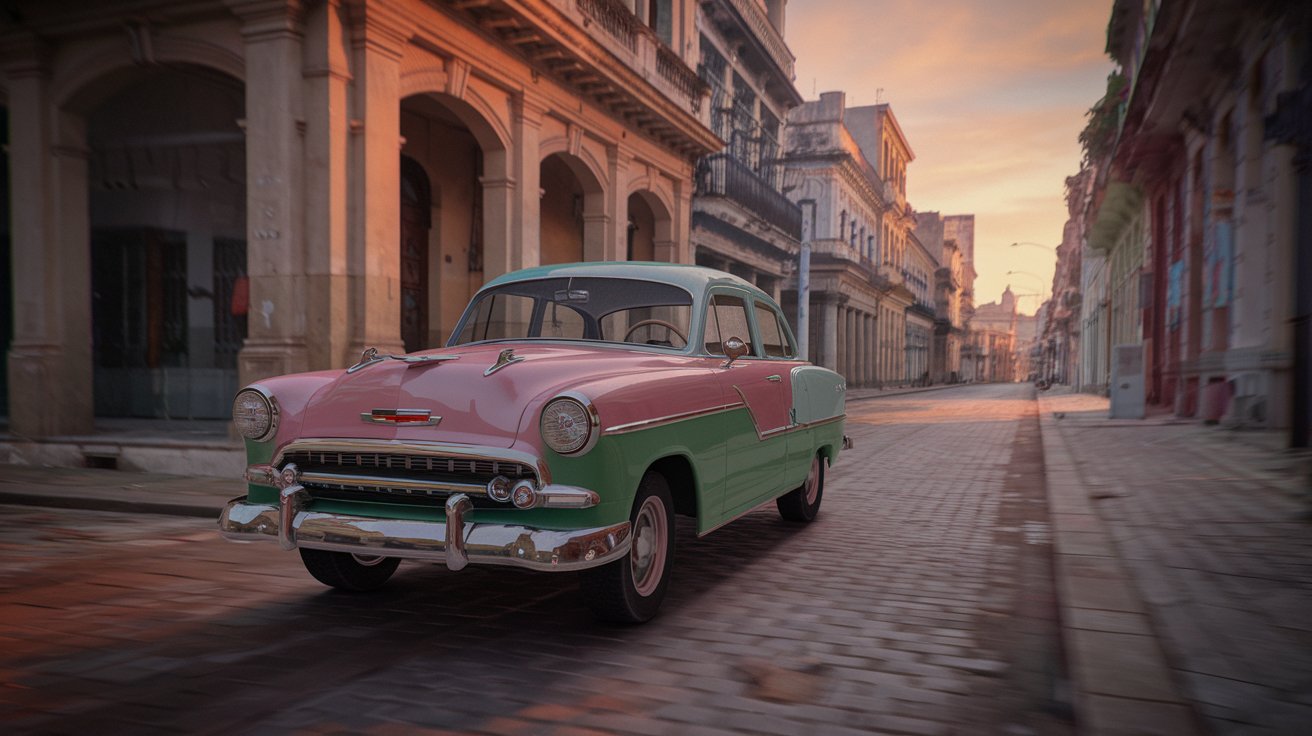
Cuba’s streets showcase one of the world’s largest collections of classic American automobiles from the 1950s, with over 60,000 vintage cars still operating daily. These iconic vehicles, known as “almendrones,” became frozen in time due to the US embargo preventing new car imports. Cuban mechanics have become masters of improvisation, keeping these classic cars running with Russian parts, homemade components, and incredible ingenuity.
Public transportation in Cuba includes the famous “camels” – articulated buses that can carry up to 300 passengers, resembling the humped shape of a camel. Horse-drawn carts remain common in rural areas and smaller cities, while Havana features an limited metro system serving only a small portion of the capital. Internet access has expanded significantly since 2015, but remains expensive and limited, with most Cubans accessing wifi through government-controlled hotspots in public parks and hotels.
Environmental and Natural Wonders of Cuba
Cuba boasts remarkable biodiversity with over 7,000 plant species, of which 3,000 are endemic to the island. The country hosts the world’s smallest bird, the bee hummingbird, which weighs less than a penny and measures just 2.25 inches long. Cuban crocodiles, found only in the Zapata Swamp, represent one of the world’s most endangered crocodilian species with fewer than 4,000 individuals remaining in the wild.
The island features six UNESCO World Heritage Sites, including Old Havana, Trinidad, and the Viñales Valley with its distinctive limestone mogotes. Cuba’s coral reefs rank among the Caribbean’s healthiest, supporting over 900 fish species and providing crucial protection against hurricanes. The country has committed to protecting 25% of its territorial waters as marine protected areas by 2030, demonstrating significant environmental leadership in the region.
Climate and Weather Patterns
Cuba experiences a tropical climate with two distinct seasons: the dry season from November to April and the wet season from May to October. The island sits directly in the Caribbean hurricane belt, experiencing an average of one major hurricane every three years. Despite climate challenges, Cuba has developed one of the world’s most effective hurricane preparedness systems, resulting in remarkably low casualty rates during major storms.
Agricultural and Economic Landscapes
Sugar cane dominated Cuba’s economy for centuries, earning it the nickname “the sugar bowl of the world,” though production has declined significantly since the 1990s. Today, tourism generates more revenue than sugar exports, with over 4.3 million visitors annually before the COVID-19 pandemic. Tobacco cultivation in the Vuelta Abajo region produces some of the world’s finest cigars, with Cuban cigars remaining a symbol of luxury and craftsmanship globally.
Social and Educational Achievements
Cuba achieved universal literacy in 1961 through a massive campaign that mobilized over 250,000 volunteers to teach reading and writing across the island. The country maintains one of the world’s highest literacy rates at 99.8% and has more teachers per capita than any other nation. Cuban universities produce approximately 40,000 graduates annually, with strong emphasis on medicine, engineering, and sciences.
The island’s healthcare system has achieved remarkable statistics, with an infant mortality rate of 4.2 per 1,000 births, lower than the United States. Cuba trains thousands of international medical students and has sent over 400,000 healthcare workers to assist in 164 countries since 1960. The nation has developed several breakthrough medications, including treatments for diabetic foot ulcers and lung cancer vaccines.
Modern Cuba: Technology and Contemporary Challenges
Internet connectivity in Cuba has expanded dramatically since 2015, growing from less than 5% to over 70% of the population having access by 2024. Mobile internet became available in 2018, revolutionizing communication and information access for millions of Cubans. Social media platforms like Facebook and WhatsApp have become essential tools for Cuban families to maintain connections with relatives abroad, though access costs remain high relative to average incomes.
Cuba faces significant economic challenges in 2024, with inflation affecting daily life and currency shortages impacting businesses. The government has implemented gradual economic reforms, allowing small private businesses (paladares) and limited private property ownership. Remittances from Cuban-Americans totaled approximately $3.5 billion in 2023, representing a crucial source of hard currency for many Cuban families and the national economy.
Sports and International Recognition Facts
Cuba has won 226 Olympic medals since 1900, ranking among the top 20 nations globally despite its relatively small population. Boxing dominates Cuban Olympic success, with 78 medals including 41 golds, producing legends like Teófilo Stevenson and Félix Savón. Baseball remains the national obsession, with the Cuban national team winning 25 World Baseball Classic and international tournament medals.
The island has produced numerous world-class athletes across multiple sports, from volleyball stars to track and field champions. Cuban athletes face unique challenges due to government restrictions on professional sports participation, though recent policy changes have allowed some athletes to compete professionally while maintaining their Cuban citizenship. Sports education begins early in Cuba, with specialized sports schools identifying and developing talent from elementary ages through comprehensive training programs.
Surprising Cultural and Lifestyle Facts
Contrary to many assumptions, there are no statues of Fidel Castro anywhere in Cuba, as he specifically requested this during his lifetime to avoid a cult of personality. Cuban salsa dancing originated from the island’s rich musical traditions but gained international recognition through New York’s Latino communities. The famous Cuban cigar industry employs “lectores” – readers who entertain cigar rollers by reading newspapers, novels, and poetry aloud during work hours, a tradition dating back to the 1860s.
Cuban rum production follows strict quality standards, with brands like Havana Club aging their finest products for up to 15 years. The island celebrates numerous unique festivals, including the Havana Jazz Festival and the Festival of New Latin American Cinema, attracting international artists and visitors. Cuban families often celebrate quinceañeras with elaborate parties that can cost several months’ salary, demonstrating the importance of tradition despite economic constraints.
Related video about 35 interesting facts about cuba
This video complements the article information with a practical visual demonstration.
Frequently Asked Questions
What are 10 interesting facts about Cuba for students?
Cuba is the largest Caribbean island with over 11 million people, has the world’s oldest communist government in the Western Hemisphere, maintains a 99.8% literacy rate, produces the world’s finest cigars, hosts thousands of 1950s American cars, offers free healthcare and education to all citizens, has won 226 Olympic medals, sits just 90 miles from Florida, features six UNESCO World Heritage Sites, and is home to the world’s smallest bird – the bee hummingbird.
What is Cuba’s favorite sport and why?
Baseball is Cuba’s national sport and cultural obsession, introduced to the island in the 1860s by Cuban students returning from American colleges. The sport represents Cuban national pride and has produced numerous Major League Baseball stars. Cuba has won 25 international baseball tournament medals and consistently ranks among the world’s top baseball nations, with games drawing massive crowds and television audiences across the island.
What are 5 key facts about Cuban culture?
Cuban culture blends Spanish, African, and indigenous Taíno influences creating unique music genres like son, salsa, and rumba. The island has produced world-renowned writers including José Martí and hosted Ernest Hemingway for over 20 years. Cuban cuisine features rice and beans as staples with African spices and Caribbean ingredients. Art and architecture reflect revolutionary themes and colonial heritage, while baseball serves as the national passion uniting all social classes.
What are important historical facts about Cuba?
Cuba gained independence from Spain in 1898 after the Spanish-American War, experienced the 1959 Cuban Revolution led by Fidel Castro, survived the 1961 Bay of Pigs invasion and 1962 Cuban Missile Crisis, has endured a US trade embargo since 1960, and transitioned leadership from Fidel to Raúl Castro in 2008, then to Miguel Díaz-Canel in 2018. The island served as a crucial Cold War battleground and remains the Western Hemisphere’s longest-running socialist state.
What makes Cuban food unique and interesting?
Cuban food combines Spanish cooking techniques with African spices and Caribbean ingredients, featuring staples like rice and beans (moros y cristianos), roasted pork, plantains, and yuca. The island produces exceptional coffee in the Sierra Maestra mountains and world-famous rum brands. Interestingly, the Cuban sandwich originated in Tampa, Florida, not Cuba, though it reflects authentic Cuban flavors and has become an international symbol of Cuban cuisine.
How many UNESCO World Heritage Sites does Cuba have?
Cuba has six UNESCO World Heritage Sites: Old Havana and its fortifications, Trinidad and the Valley de los Ingenios, San Pedro de la Roca Castle in Santiago de Cuba, Viñales Valley, Alejandro de Humboldt National Park, and the Urban Historic Centre of Cienfuegos. These sites showcase Cuba’s colonial architecture, natural biodiversity, revolutionary history, and cultural significance spanning over 500 years of Caribbean civilization.
| Key Aspect | Important Details | Significance |
|---|---|---|
| Geography | Largest Caribbean island, 90 miles from Florida | Strategic location influencing US-Cuba relations |
| Government | Socialist state since 1959 revolution | Longest-running communist government in Western Hemisphere |
| Culture | Spanish-African-Taíno fusion, baseball obsession | Unique Caribbean identity with global influence |
| Education | 99.8% literacy rate, free universal education | Among world’s highest educational achievements |
| Environment | 6 UNESCO sites, 7,000 plant species | Exceptional biodiversity and conservation efforts |