
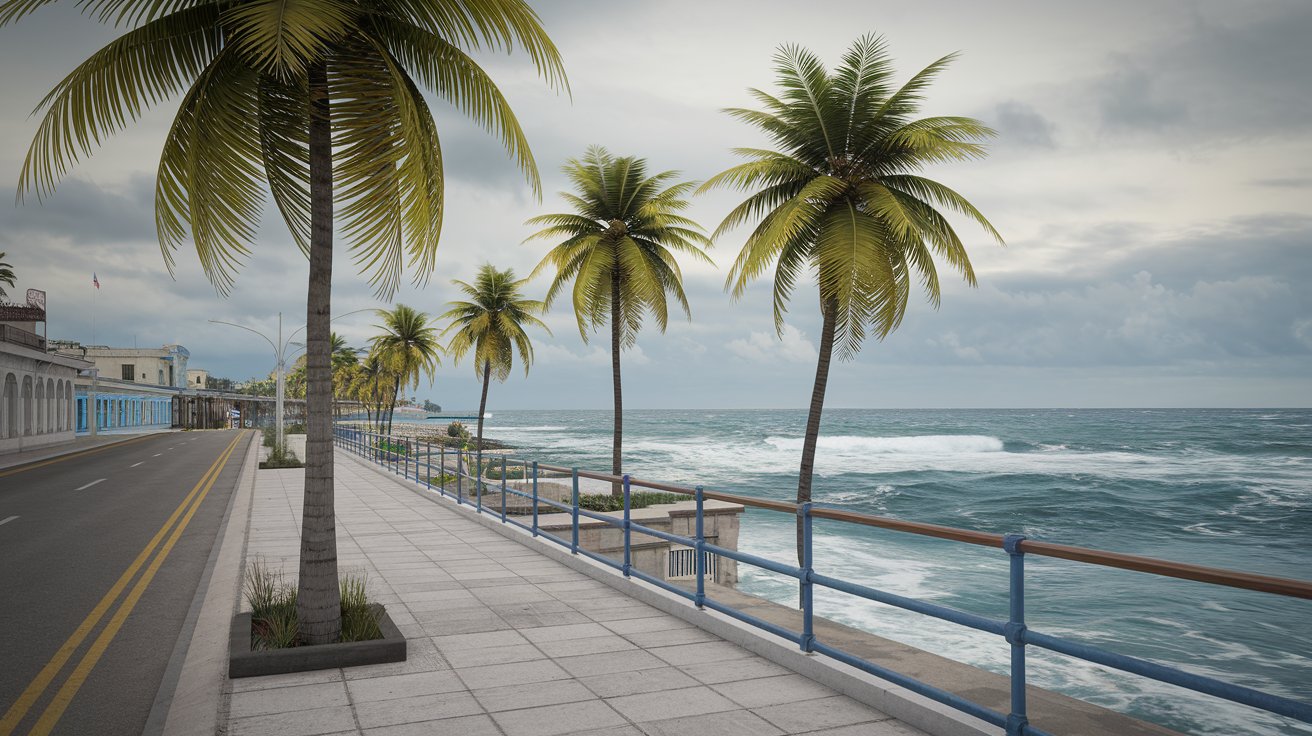
Cuba’s most famous landmark is El Malecón, the iconic 8-kilometer seawall stretching along Havana’s coastline. This beloved promenade serves as the heart of Cuban social life, where locals and tourists gather to enjoy spectacular sunsets, music, and vibrant culture. Beyond the Malecón, Cuba boasts numerous world-renowned attractions that showcase its rich history and architectural heritage.
El Malecón: Cuba’s Most Iconic Landmark
The Malecón seawall stands as Cuba’s most recognizable and beloved landmark, earning its reputation as Havana’s living room. Built between 1901 and 1952, this magnificent waterfront promenade extends 8 kilometers from the Castillo de San Salvador de la Punta to the Almendares River. The seawall serves multiple purposes as a coastal defense, recreational space, and cultural gathering point where generations of Cubans have shared stories, music, and dreams.
This famous Cuban attraction offers unparalleled views of the Florida Straits and serves as a natural amphitheater for impromptu concerts, romantic encounters, and philosophical debates. The Malecón’s weathered concrete wall bears witness to decades of storms, celebrations, and daily life, making it an authentic symbol of Cuban resilience and community spirit.
Historic Havana Landmarks That Define Cuba
Beyond the Malecón, Havana hosts several world-famous landmarks that attract millions of visitors annually. These architectural marvels and historic sites collectively form the cultural backbone of Cuba’s capital city.
El Capitolio: Cuba’s Architectural Crown Jewel
The Capitolio Nacional represents one of Cuba’s most impressive architectural achievements, completed in 1929 and inspired by the U.S. Capitol Building. This magnificent structure features a 92-meter dome topped with a bronze replica of Mercury, making it one of the tallest buildings in Havana. The building currently houses the Cuban Academy of Sciences and serves as a testament to Cuba’s pre-revolutionary grandeur and architectural ambition.
Old Havana: UNESCO World Heritage Treasure
Habana Vieja stands as Cuba’s most comprehensive colonial landmark, designated as a UNESCO World Heritage Site in 1982. This 4.37-square-kilometer historic district contains over 900 buildings of historical importance, including baroque and neoclassical monuments dating from the 16th to 19th centuries. The area features iconic plazas like Plaza de Armas, Plaza de la Catedral, and Plaza Vieja, each offering unique insights into Cuba’s colonial past and architectural evolution.
Military Fortresses: Guardians of Cuban History
Cuba’s strategic location in the Caribbean made it essential to construct powerful defensive fortifications that now stand as major tourist attractions and historical landmarks.
Castillo de los Tres Reyes del Morro
El Morro fortress, constructed between 1589 and 1630, represents one of Cuba’s most recognizable landmarks. This imposing stone fortress guards the entrance to Havana Bay and features a distinctive lighthouse that has guided ships for centuries. The fortress houses the Maritime Museum and offers spectacular views of Havana’s skyline, making it a must-visit destination for understanding Cuba’s colonial defense strategies.
Fortaleza de San Carlos de la Cabaña
La Cabaña fortress, completed in 1774, stands as the largest colonial fortress in the Americas and a premier Cuban attraction. This massive military complex spans 700 meters and houses multiple museums, including the Che Guevara Museum. Every evening at 9 PM, the traditional cannon ceremony recreates the colonial practice of announcing the closing of the city gates, providing visitors with an authentic historical experience.
Revolutionary Cuba: Landmarks of Historical Significance
Cuba’s revolutionary heritage created numerous historically significant landmarks that commemorate the island’s transformation and key figures in its modern history.
Museum of the Revolution
The Museo de la Revolución occupies the former Presidential Palace and chronicles Cuba’s revolutionary struggle from 1868 to 1959. This landmark museum houses over 9,000 artifacts, including personal belongings of revolutionary leaders, weapons, documents, and multimedia presentations. The building itself represents Cuban republican architecture and serves as a powerful symbol of political transformation in Latin America.
Plaza de la Revolución
Plaza de la Revolución functions as Cuba’s most important political landmark and one of the world’s largest public squares, covering 72,000 square meters. The plaza features the iconic José Martí Memorial, a 109-meter tower topped with a statue of Cuba’s national hero. The surrounding government buildings display giant portraits of Che Guevara and Camilo Cienfuegos, creating a powerful visual representation of Cuban revolutionary ideals.
Natural Landmarks Beyond Havana
Cuba’s natural landmarks showcase the island’s diverse geography and ecological significance, extending far beyond the capital city’s urban attractions.
Viñales Valley: UNESCO Protected Landscape
The Viñales Valley in western Cuba features dramatic limestone formations called mogotes, creating one of the country’s most distinctive natural landmarks. This UNESCO World Heritage Site spans 132 square kilometers and showcases traditional tobacco farming methods that have remained unchanged for centuries. The valley’s unique karst landscape and agricultural heritage make it Cuba’s premier natural attraction outside Havana.
Trinidad: Colonial Jewel of Central Cuba
Trinidad represents Cuba’s best-preserved colonial city landmark, founded in 1514 and frozen in time since the 19th century. This UNESCO World Heritage Site features cobblestone streets, pastel-colored colonial mansions, and the magnificent Plaza Mayor. The nearby Valle de los Ingenios showcases Cuba’s sugar plantation history, making Trinidad a comprehensive cultural and historical destination.
Eastern Cuba’s Historic Treasures
Eastern Cuban landmarks offer insights into the island’s independence struggles and African cultural heritage, providing a different perspective from Havana’s attractions.
Santiago de Cuba’s Revolutionary Sites
Santiago de Cuba, known as the cradle of the revolution, houses several crucial landmarks including the Moncada Barracks where Castro’s revolutionary movement began in 1953. The city also features the Santa Ifigenia Cemetery, final resting place of José Martí and Fidel Castro. The fortress of San Pedro de la Roca del Morro, another UNESCO site, guards Santiago Bay and represents Spanish colonial military engineering.
Sierra Maestra Mountain Range
The Sierra Maestra mountains serve as Cuba’s most significant natural and historical landmark, reaching 1,974 meters at Pico Turquino, the country’s highest point. This mountain range sheltered Castro’s revolutionary forces and contains numerous historic sites including La Comandancia, Castro’s former headquarters. The area combines natural beauty with revolutionary history, making it a unique Cuban destination for adventure seekers and history enthusiasts.
Related video about what is the most famous landmark in cuba
This video complements the article information with a practical visual demonstration.
Your questions answered
What is the most famous landmark in Cuba?
El Malecón is Cuba’s most famous landmark – an 8-kilometer seawall along Havana’s coastline built between 1901 and 1952. This iconic promenade serves as Havana’s social heart where locals and tourists gather for music, conversation, and spectacular sunsets over the Florida Straits.
What are three famous landmarks in Cuba?
Cuba’s three most famous landmarks are El Malecón (Havana’s iconic seawall), Old Havana (UNESCO World Heritage colonial district with over 900 historic buildings), and El Capitolio (the impressive 1929 government building with a 92-meter dome inspired by the U.S. Capitol).
What is the number one attraction in Cuba?
Old Havana (Habana Vieja) ranks as Cuba’s number one attraction, designated as a UNESCO World Heritage Site in 1982. This 4.37-square-kilometer historic district contains baroque and neoclassical architecture spanning four centuries, featuring iconic plazas, museums, and authentic Cuban culture.
What natural landmarks exist in Cuba?
Cuba’s premier natural landmarks include Viñales Valley with its dramatic limestone mogotes and UNESCO protection, the Sierra Maestra mountain range featuring Cuba’s highest peak at 1,974 meters, and the Valle de los Ingenios near Trinidad showcasing historical sugar plantation landscapes.
What makes Cuban landmarks historically significant?
Cuban landmarks represent 500 years of history including Spanish colonial architecture, independence struggles, and revolutionary heritage. Sites like the Moncada Barracks in Santiago de Cuba, Plaza de la Revolución in Havana, and various fortresses demonstrate Cuba’s strategic importance and cultural evolution throughout different historical periods.
When is the best time to visit Cuba’s landmarks?
The optimal time to visit Cuban landmarks is during the dry season from November to April, when temperatures average 70-80°F with minimal rainfall. This period offers ideal conditions for exploring outdoor attractions like El Malecón, fortress tours, and natural sites like Viñales Valley without tropical weather interruptions.
| Landmark Category | Top Examples | Historical Significance |
|---|---|---|
| Urban Landmarks | El Malecón, Capitolio, Old Havana | Colonial and republican architecture |
| Military Fortresses | El Morro, La Cabaña, Santiago fortress | Spanish colonial defense system |
| Revolutionary Sites | Plaza de la Revolución, Moncada Barracks | Cuban revolution and independence movements |
| Natural Landmarks | Viñales Valley, Sierra Maestra | UNESCO protection and ecological importance |